Blogs
Reading Your Vehicle’s Towing Capacity Before You Connect

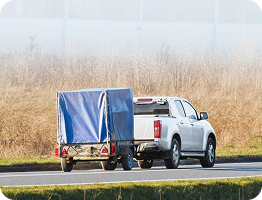
Every year, drivers hitch trailers to vehicles never designed to pull them. They see a tow rating in an old advertisement or remember a friend towing something similar. They connect the trailer, load the vehicle, and discover the truth halfway up a grade with traffic closing in from behind.
Understanding your vehicle's actual towing capacity requires more than reading a single number. The door jamb sticker tells one story. The owner's manual tells another. The real world tells a third. Learning to read all three prevents disaster.
The Difference Between Capable And Rated
A vehicle can roll forward while pulling weight. That does not mean it can do so safely, repeatedly, or without damage. Every manufacturer tests vehicles under specific conditions to determine maximum towing capacity. Those tests assume ideal circumstances. New vehicle. Flat ground. No headwind. No extra passengers. No cargo in the bed or trunk.
Real world conditions rarely match the test environment. Heat, altitude, grade, and payload all reduce what your vehicle can actually handle. The rated capacity represents an upper limit, not a recommended operating range.
Where To Find The Truth
Three sources provide towing information. Read all three before making assumptions.
The door jamb sticker lists the Gross Vehicle Weight Rating. This number indicates the maximum weight of your fully loaded vehicle including passengers, cargo, fuel, and tongue weight. Exceed this number and you overload axles, bearings, tires, and suspension components regardless of what the engine can pull.
The owner's manual contains detailed towing specifications by engine, transmission, axle ratio, and cooling package. Two identical trucks with different rear axle ratios can have dramatically different towing capacities. The manual explains what your specific configuration delivers.
The manufacturer's website sometimes offers lookup tools by Vehicle Identification Number. These tools confirm exactly how your vehicle left the factory.
The Gross Combination Weight Reality
Every manufacturer publishes a Gross Combined Weight Rating. This number represents the maximum weight of your loaded vehicle, all passengers, all cargo, and the fully loaded trailer operating together.
Most drivers forget this number exists. They focus on trailer capacity and ignore the combined total. A vehicle rated to tow 8,000 pounds might have a combined rating of 12,000 pounds. If your vehicle weighs 6,000 pounds loaded, you can only tow 6,000 pounds before exceeding the combined rating even though the individual tow rating suggests more.
The math matters. Add your vehicle's loaded weight to the loaded trailer weight. Compare that total to the Gross Combined Weight Rating. If the total exceeds the rating, you are overloaded regardless of what the hitch says.
The 7,000 Pound Question
Our car haulers carry a 7,000 pound Gross Vehicle Weight Rating. The trailer itself weighs approximately 2,000 pounds. This leaves 5,000 pounds of cargo capacity for the vehicle you intend to transport.
A 4,000 pound car on this trailer creates a combined trailer weight of 6,000 pounds. Add 600 pounds of tongue weight to your vehicle. Add passengers, cargo, and fuel. The total approaches limits quickly.
Before reserving, calculate your numbers. Know your vehicle's curb weight. Know your trailer's empty weight. Add your cargo. Compare to your vehicle's ratings.
The Equipment You Actually Need
Towing capacity assumes proper equipment. A hitch ball rated for the weight. A receiver rated for the tongue load. Wiring that supports trailer lighting without overloading vehicle circuits. Mirrors that allow visibility around a wider load.
Vehicles equipped from the factory with towing packages include transmission coolers, heavier alternators, upgraded suspensions, and sometimes different gear ratios. Vehicles without these packages lack the components that make towing sustainable.
Attempting maximum rated capacity with a vehicle lacking the tow package invites transmission overheating, alternator failure, and premature wear. The engine might pull the weight. The supporting systems may not survive the experience.
The Safety Margin
Experienced towers build margin into every calculation. They stay twenty percent below rated capacities. They account for mountain grades and summer heat. They understand that published ratings assume a professional driver on perfect pavement in ideal weather.
A vehicle rated for 7,000 pounds tows 5,600 pounds comfortably. That same vehicle towing 6,900 pounds struggles on the first significant grade. The transmission hunts for gears. Coolant temperatures climb. Brake fade appears on downhill sections.
Margin protects you from conditions the ratings never considered.
What To Do Before You Reserve
Open your driver side door. Photograph the jamb sticker. Find your owner's manual or look up specifications online. Calculate your vehicle's loaded weight with passengers and cargo. Subtract that from your Gross Combined Weight Rating. The remainder equals your maximum trailer weight.
Compare that number to the loaded weight of the trailer plus the vehicle you plan to transport. If the numbers align, proceed. If they conflict, adjust expectations or choose a different trailer.
Common Mistakes To Avoid
Never assume a hitch receiver rating matches vehicle capacity. The hitch might support more than the vehicle. The vehicle might support more than the hitch. Verify both.
Never trust "I pulled this with my buddy's same model year." Identical model years with different options pull differently.
Never ignore payload capacity while focused on towing capacity. Every pound of tongue weight counts against your vehicle's payload just like a passenger in the seat.
Final Check Before Hitching
Our rental team asks about your tow vehicle before every reservation. This is not idle curiosity. We want customers leaving our lot with combinations that work.
Know your numbers before you arrive. Bring questions if uncertainty remains. The few minutes spent confirming capacity prevent hours of trouble on the highway.